For a day trip from Tokyo, the best time to visit Izu is December to February: it is the driest part of the year, the air is clearest for a Mount Fuji view from Mount Omuro (Omuroyama), the capybaras at Izu Shaboten Zoo bathe in hot water, and February brings the Kawazu-zakura and the yamayaki burn on Mount Omuro. For mild walking weather, choose April to May (outside Golden Week) or late October to November. Avoid the rainy season from about 6 June to 19 July, Obon in mid-August and the typhoon peak in August and September.
Izu day trip with train & Mount Omuro
Izu Month by Month
Average weather at Ajiro (Atami), sunset, and the Mount Omuro chairlift hours for each month.
Jan
10.7° / 3.9°C
Dry and clear, the best odds of a Mount Fuji view. Capybara bath at the zoo. Busy 1–3 January.
Feb
11.3° / 4.0°C
Kawazu Sakura Festival from 6 Feb 2027; Omuro yamayaki expected 14 Feb. Kawazu is busy at weekends.
Mar
14.2° / 6.6°C
Kawazu festival ends 7 Mar 2027. Lift back on longer hours. Rain picks up.
Apr
18.8° / 10.9°C
Mild and green. Capybara bath ends 4 Apr 2027. Golden Week starts 29 Apr.
May
22.7° / 15.3°C
Golden Week to 5 May 2027 fills trains and roads; quieter weekdays after.
Jun
25.0° / 18.8°C
Rainy season from about 6 June. The lift usually closes for maintenance in June.
Jul
28.9° / 22.6°C
Rainy season ends about 19 July; hot and humid. School holidays begin late in the month.
Aug
30.2° / 23.8°C
Hottest month. Obon (about 13–16 Aug) is the busiest week. Typhoon season.
Sep
26.7° / 20.9°C
Wettest month at Ajiro and peak typhoon season. Still hot.
Oct
21.8° / 16.1°C
Lift closes an hour earlier from 1 October. Typhoons still possible.
Nov
17.2° / 11.3°C
Mild and drier. Autumn leaves at Shuzenji from mid-November; capybara bath from 21 Nov 2026.
Dec
12.9° / 6.6°C
Driest month. Lift closed for maintenance 7–18 Dec 2026. Busy from about 29 December.
Sources: Temperatures: Japan Meteorological Agency 1991–2020 normals for Ajiro (Atami), average daily high / low. Sunset: National Astronomical Observatory of Japan, Shizuoka city, on the 15th, 2027 (Ito is about 3 minutes earlier). Chairlift hours and closures: the operator’s site, omuroyama.com, read November 2026. Events: kawazuzakura.jp, Izu Shaboten Zoo, JMA rainy-season normals for Tokai, Cabinet Office holidays.
These are Japan Meteorological Agency (JMA) averages for Ajiro, in Atami just north of Ito; JMA has no station in Ito itself. Sunset times are for Shizuoka city; in Ito the sun sets about 3 minutes earlier.
Weather at Ajiro, Inatori and Irozaki
Three JMA stations bracket the east coast of the Izu Peninsula (Izu Hanto), Shizuoka: Ajiro in Atami, Inatori in Higashi-Izu about 20 km south of Ito, and Irozaki at the southern tip. The figures are 1991–2020 averages of the daily high and low in °C, and Ajiro’s average monthly rainfall.
| Month | Ajiro (Atami) high / low | Inatori (near Ito) high / low | Irozaki (south tip) high / low | Ajiro rain (mm) |
|---|---|---|---|---|
| Jan | 10.7 / 3.9 | 10.6 / 3.9 | 11.0 / 5.7 | 76 |
| Feb | 11.3 / 4.0 | 11.2 / 4.0 | 11.5 / 5.7 | 82 |
| Mar | 14.2 / 6.6 | 13.9 / 6.5 | 14.0 / 8.1 | 158 |
| Apr | 18.8 / 10.9 | 18.2 / 10.7 | 17.9 / 12.1 | 168 |
| May | 22.7 / 15.3 | 22.0 / 14.9 | 21.2 / 16.0 | 173 |
| Jun | 25.0 / 18.8 | 24.4 / 18.4 | 23.6 / 19.1 | 252 |
| Jul | 28.9 / 22.6 | 28.3 / 22.2 | 27.0 / 22.7 | 243 |
| Aug | 30.2 / 23.8 | 29.7 / 23.4 | 28.8 / 24.3 | 186 |
| Sep | 26.7 / 20.9 | 26.5 / 20.8 | 26.3 / 21.8 | 264 |
| Oct | 21.8 / 16.1 | 21.8 / 16.2 | 22.1 / 17.5 | 237 |
| Nov | 17.2 / 11.3 | 17.4 / 11.4 | 17.9 / 13.0 | 108 |
| Dec | 12.9 / 6.6 | 13.0 / 6.5 | 13.4 / 8.3 | 66 |
What this means for a day trip: winter highs of about 11 °C are mild for walking the crater rim and the Jogasaki coast, but the rim is exposed, so bring a warm layer and gloves. Summer highs near 30 °C come with high humidity, and there is little shade on Mount Omuro. December and January are the driest months; June and September bring the most rain at Ajiro. Inatori gets more rain than Ajiro in most months (about 2,360 mm a year against 2,010 mm). Irozaki stays about 2 °C warmer on winter nights but is windy all year, with average wind speeds of 4.3–6.7 m/s.
Winter: Clear Skies, Capybaras and Early Cherry Blossom (December to February)
Winter is when Izu offers the most that Tokyo doesn’t. Humidity at Ajiro falls to about 60% in December and January, against about 80% from June to August, which gives you a better chance of seeing Mount Fuji from the top of Mount Omuro. A view is never guaranteed, and mornings are often clearer than afternoons. The cone turns golden-brown in winter, while in summer it is green.
The capybara open-air hot bath at Izu Shaboten Zoo, a tradition since 1982, runs from 21 November 2026 to 4 April 2027, with a yuzu (citrus) bath from 22 December to 11 January. The zoo sits next to the Omuro chairlift and opens 9:30–16:00. See the Izu Shaboten Zoo guide for bath times.
In January, the Atami Baien plum garden holds its plum festival (in 2026 it ran from 10 January to 8 March), and early-blooming Atami-zakura line the Itokawa promenade in Atami from about mid-January. The 2027 dates were not yet published when we checked.
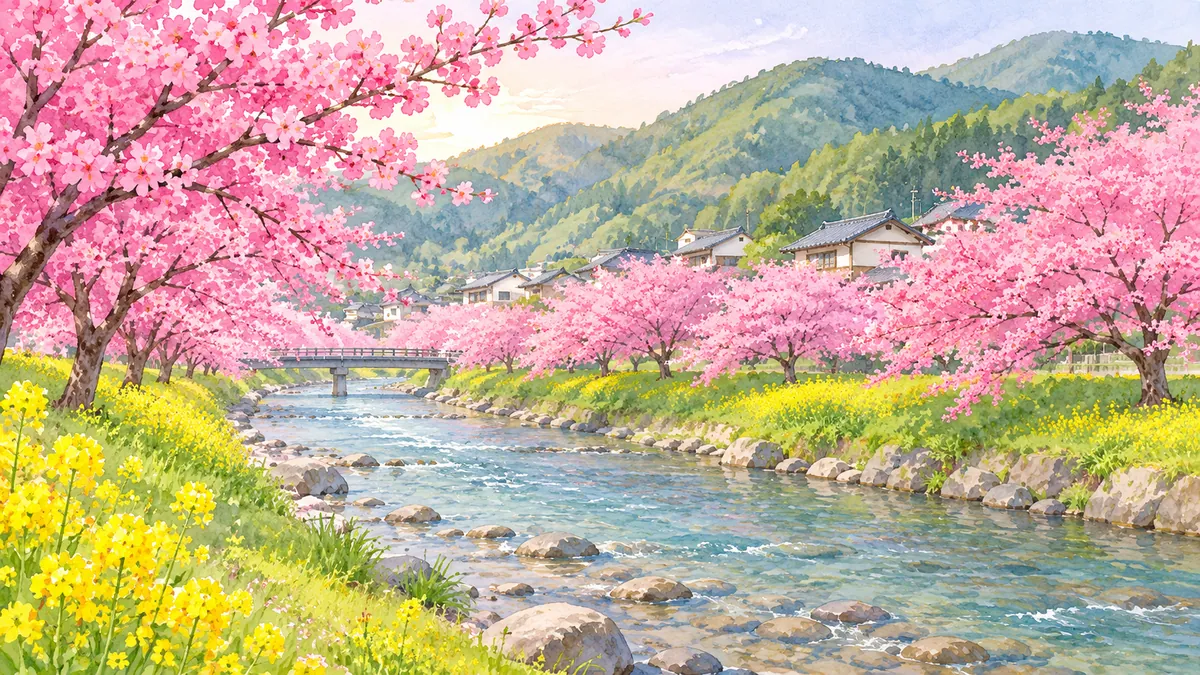
February is the busiest winter month on the peninsula. The Kawazu Sakura Festival runs from 6 February to 7 March 2027, with about 850 Kawazu-zakura trees along the river, starting about 3 minutes’ walk from Kawazu station. Full bloom lasts about a week to ten days and does not follow the festival dates, so check the bloom reports a few days before you go. Weekends are crowded and roads into Kawazu jam; take the train. See the Kawazu cherry blossom festival guide.
On the second Sunday of February, Mount Omuro’s grass is burned in the yamayaki, a custom said to go back about 700 years. In 2026 it took place on 8 February. The 2027 burn is expected on 14 February, but the date had not been announced when we checked; it is usually confirmed in late January.
The trade-offs: the chairlift runs only until 16:00 from October to February, and it closes for maintenance from 7 to 18 December 2026. The New Year period (about 29 December to 3 January) brings heavy traffic and full trains.
Spring: Mild Days and Golden Week (March to May)
March is still cool, and from March the chairlift runs until 17:00. April and May bring highs of about 19–23 °C at Ajiro and green slopes on Mount Omuro, good weather for the Jogasaki coastal trail, but rainfall rises to about 160–170 mm a month.
Golden Week runs from 29 April to 5 May 2027: 29 April is a Thursday holiday, and 1–5 May is a five-day block of weekend and holidays. Trains and the coast road are at their busiest then, so book an Odoriko seat a month ahead or pick another week. The 2027 holidays also make 20–22 March a three-day weekend.
Summer: Rainy Season, Heat, Obon and Typhoons (June to September)
The rainy season (tsuyu) in the Tokai region, which includes Izu, normally starts about 6 June and ends about 19 July. In 2026 it ran from about 2 June to 9 July with 144% of normal rainfall. The Mount Omuro chairlift also usually closes for maintenance for a period in June; check the operator’s site, omuroyama.com, before you plan a June trip. Shimoda Park’s hydrangeas bloom in June.
July and August are hot and humid, with highs of 29–30 °C. School holidays run from late July, and Obon (about 13–16 August) is the busiest week of the year on the roads. Summer evenings are the season for fireworks: Ito’s Anjin Festival sea fireworks took place on 10 August 2026, and Atami holds marine fireworks on several summer evenings. Sunset comes after 18:30 from May to August, which gives you long evenings on the coast.
Typhoons approach Japan most often in August and September, according to JMA’s 1991–2020 averages. September is also the wettest month at Ajiro. A typhoon can stop trains, the chairlift and coastal paths, so keep a summer trip flexible and check the forecast two or three days ahead.
Autumn: Clearer Air and Shuzenji Leaves (October and November)
From 1 October the chairlift closes an hour earlier, at 16:00, and sunset moves from about 17:13 in mid-October to 16:42 in mid-November. Typhoons are still possible in October. November is one of the more comfortable months for walking, with highs of about 17 °C and much less rain than September and October.
Inland, the maples at Shuzenji onsen usually peak from mid-November to early December. Shuzenji is inland, reached by the Izuhakone Railway from Mishima or by the Odoriko trains that run through to Shuzenji, so it makes a separate day trip from the east coast.
Sunset and the Chairlift Hours
Mount Omuro’s chairlift runs 9:00–17:00 from March to September and 9:00–16:00 from October to February; the last ride down is about 15 minutes after the last ride up. In winter the last ride down comes 20–40 minutes before sunset, so the summit is not a sunset spot then. Reach the lift by early afternoon. In summer you have daylight on the Jogasaki coast until about 19:00.
Holidays and Crowds
Shizuoka Prefecture counted 40.7 million visitor-visits to the Izu region in the year to March 2026, but it publishes no monthly figures. Weekends and Japanese holidays matter more for a day trip than the month: the east coast road and the Odoriko fill on the mornings of long weekends, and traffic heading back to Tokyo builds on their last afternoons. The busiest periods are New Year, February weekends in Kawazu, Golden Week, Obon and the 2027 three-day weekends (9–11 January, 20–22 March, 17–19 July, 18–20 September and 9–11 October). A weekday is the simplest way to avoid crowds in any month.
Best Months for Each Kind of Trip
- Mount Fuji from Mount Omuro: December and January, the driest and least humid months. Go early in the day.
- Kawazu-zakura: mid-February to early March; the 2027 festival runs 6 February to 7 March.
- The yamayaki: the second Sunday of February (expected 14 February 2027).
- Capybara bath: 21 November 2026 to 4 April 2027; the yuzu bath from 22 December to 11 January.
- Green slopes on Mount Omuro and the coastal trail: late April to May, avoiding Golden Week, or the first weeks of June before the rain sets in.
- Long days on the coast and fireworks: late July and August, if you can manage the heat.
- Autumn leaves: Shuzenji from mid-November to early December.
Guided day trips from Tokyo run all year, and the Tokyo to Izu guide covers the train times.
Live conditions on the homepage
The conditions strip at the top of our homepage shows a forecast for the day you look at it. Here is where each figure comes from.
- Weather, wind and waves: the Japan Meteorological Agency’s forecast for its “Izu” forecast area, which covers the peninsula. Wind and wave values are forecasts for the coast, not readings at the chairlift.
- Temperature: JMA’s forecast high and low for its Ajiro (Atami) point, the nearest forecast point to Ito.
- Warnings and advisories: JMA’s current warnings for Ito city.
- Sunset in Ito: computed on the page from Ito’s latitude and longitude, not taken from a published table.
- Chairlift hours: from the operator’s site, omuroyama.com: last ride up at 17:00 from March to September and 16:00 from October to February.
- Season: the Kawazu Sakura Festival window from the official Kawazu festival site and the capybara bath season from Izu Shaboten Zoo’s own site.
Source: Japan Meteorological Agency. JMA data is used under the Government of Japan Standard Terms of Use (version 2.0). The forecast is loaded live in your browser, with a copy saved when the site was last built in case the live feed is unavailable.
The strip never tells you whether a tour or the chairlift will run. The chairlift operator decides on the day, and it stops the lift for strong wind or thunder even when the forecast looks fine; tour operators decide about their own trips. Check omuroyama.com on the morning you go, and your booking confirmation for any change from the tour operator.
Questions About the Best Time to Visit Izu
What is the best month to visit Izu?
For a day trip from Tokyo, February offers the most: the Kawazu-zakura, the yamayaki on Mount Omuro, the capybara bath and dry, clear weather. For mild walking weather without the crowds, choose a weekday in May (after Golden Week) or November.
When do the Kawazu cherry blossoms bloom?
Usually from early or mid-February into early March. The 2027 Kawazu Sakura Festival runs from 6 February to 7 March, and full bloom lasts about a week to ten days within that window.
Is Izu worth visiting in winter?
If you dress for an exposed crater rim, yes. Highs are about 11 °C, winter is the driest season and the clearest for Mount Fuji views, and the capybara bath runs all winter. The chairlift closes at 16:00, so start early.
When is the rainy season in Izu?
The Tokai region’s rainy season normally runs from about 6 June to 19 July. June is also when the Mount Omuro chairlift usually closes for maintenance.
Can I see Mount Fuji from Mount Omuro?
On clear days, yes. Your best chance is a morning from December to February. It is never guaranteed, especially in the humid months from May to September.
Check Dates for the Izu Day Trip from Tokyo
Mount Omuro, a short Izukyu train ride and the Jogasaki coast in one day from Tokyo. Pick a date to see the times and price.
Check dates and prices