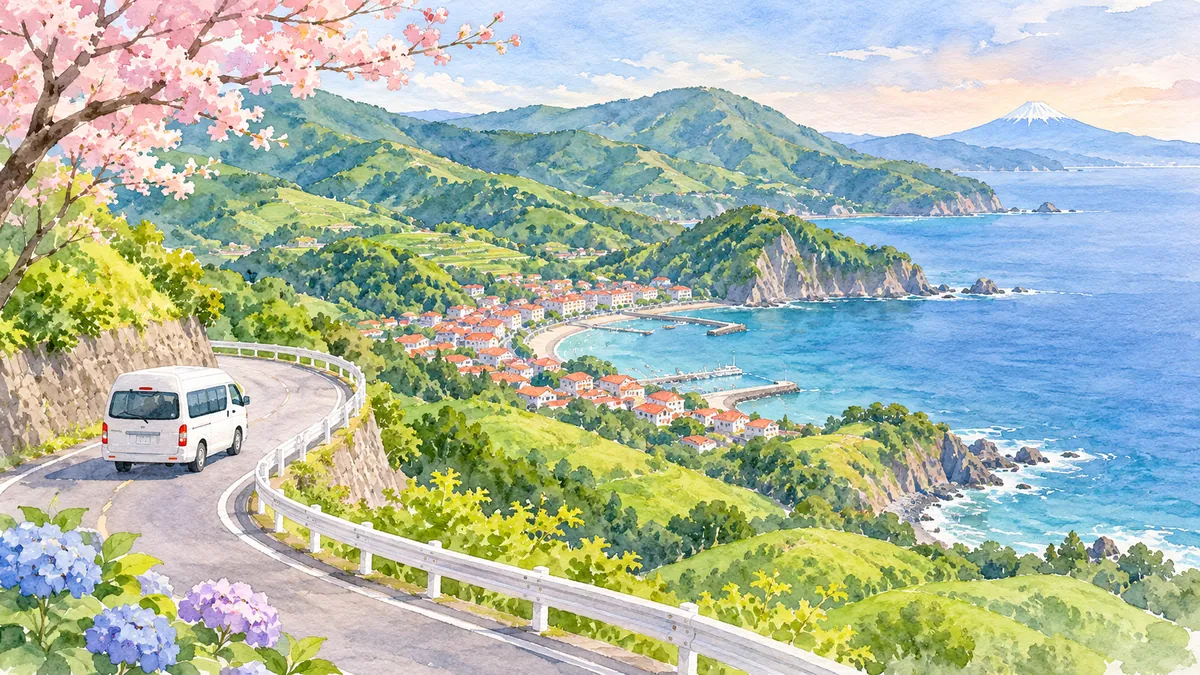
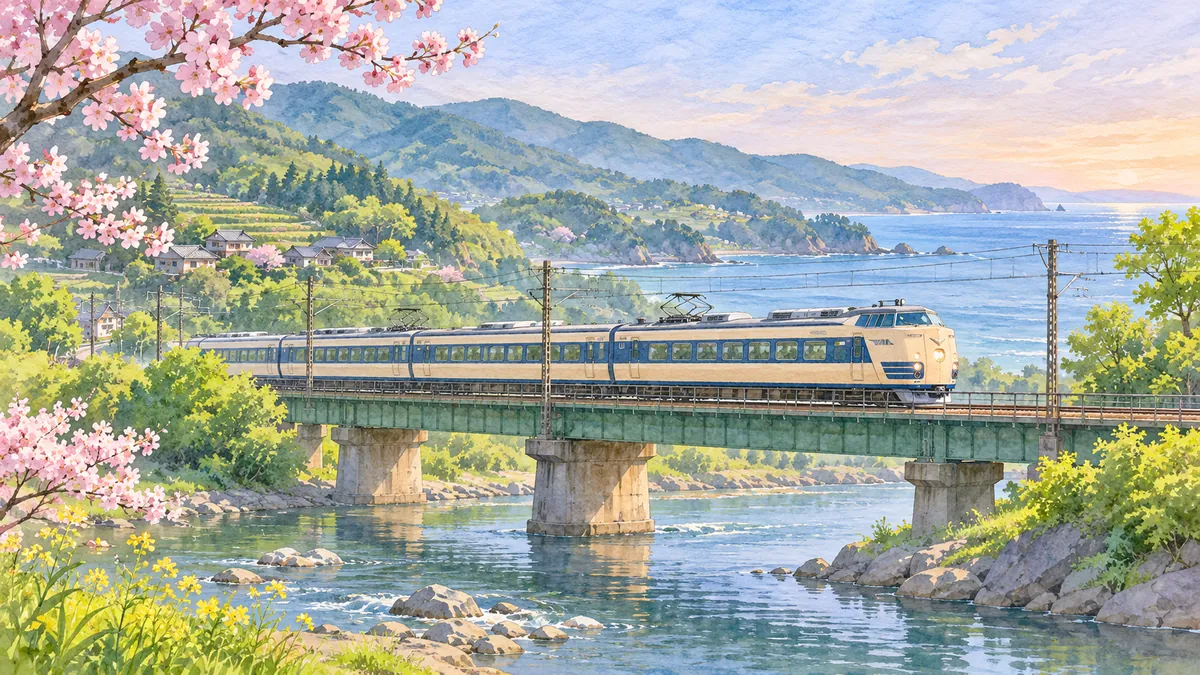
Choose Hakone if you want the shorter, simpler day from Tokyo: the Romancecar reaches Hakone-Yumoto from Shinjuku in about 85 minutes, and one pass covers the trains, ropeways and lake boats of the classic loop. Choose the Izu Peninsula (Izu Hanto) if you want to walk the rim of a volcano crater, cross a suspension bridge over lava sea cliffs, watch capybaras in a hot bath in winter or see cherry blossom in February. Izu asks for a longer day: about 1 hour 45 minutes by Odoriko train to Ito plus a local bus, or 11 to 13 hours door to door on a van tour.
Izu day trip with train & Mount Omuro
Izu and Hakone Compared Side by Side
This table compares the east coast of Izu around Ito, where most day trips go, with Hakone’s classic loop.
| Izu (Ito, Mount Omuro, Jogasaki coast) | Hakone | |
|---|---|---|
| Main appeal | A grassy volcano cone and a lava-cliff Pacific coast | Mountains, a crater lake and hot springs on an established sightseeing loop |
| Signature experiences | Mount Omuro chairlift and crater rim walk; Kadowaki Suspension Bridge on the Jogasaki coast; the Izukyu coastal train; Izu Shaboten Zoo’s capybara bath (late November to early April); Kawazu-zakura (February) | Ropeways, Lake Ashi boats, Owakudani volcanic valley, the Open Air Museum |
| Travel time from Tokyo | Odoriko to Ito about 1 h 45 min, then about 40 min by bus to Mount Omuro; tours drive 2.5–3.5 hours each way | Romancecar Shinjuku to Hakone-Yumoto about 85 min |
| Transport cost, one day | Estimated ¥10,000–12,000 round trip by Odoriko and bus (fares rose March 2026, check JR East) | About ¥9,500 with the Freepass and Romancecar (our estimate) |
| Getting around | Separate train, bus and lift tickets; buses every 30 minutes to 2 hours | One Hakone Freepass covers the loop |
| Weather and views | Winter is driest; Mount Fuji from Omuro only on clear days; the lift stops in strong wind | Fuji views on the loop, also weather-dependent |
| Crowds | Busy on weekends, holidays and in Kawazu in February; Izu region 40.7 million visits in FY2025 | Busy on weekends and holidays; no comparable figure here |
| Kids | Capybaras and the zoo; a long day on tours | Shorter journey; boats and ropeways |
| Onsen | Ito, Atami and Shuzenji; tours include no bath time | Hot-spring towns along the loop, from Hakone-Yumoto |
| Best for | Coast, volcano and seasonal winter sights | First-timers who want an easy loop and a shorter commute |
Travel Time and Transport Costs
Hakone is the shorter trip. It is less than 100 km from Tokyo, and the Odakyu Romancecar runs from Shinjuku to Hakone-Yumoto in about 85 minutes. The Hakone Freepass bundles the classic loop of mountain railway, cable car, ropeway, buses and lake boat.
Izu’s east coast takes longer. The Odoriko limited express from Tokyo reaches Ito in about 1 hour 45 minutes; then a Tokai bus takes about 40 minutes to Mount Omuro and Izu Shaboten Zoo. Door to door, plan on roughly 2 hours 20 minutes to 2 hours 40 minutes each way. Kawazu is about 2 hours 40 minutes by Odoriko, and Shimoda about 2 hours 35 minutes to Izukyu-Shimoda, which makes for a long day.
| Ticket | Price | Note |
|---|---|---|
| Romancecar, Shinjuku to Hakone-Yumoto | ¥2,470 one way | About 85 min |
| Hakone Freepass from Shinjuku | ¥7,100, valid 2 days | Romancecar seats cost extra |
| Odoriko, Tokyo to Ito | About ¥4,000 one way (before the March 2026 JR fare rise) | About 1 h 45 min, all seats reserved |
| Tokai bus, Ito Station to Mount Omuro | About ¥880 one way | About 40 min, about two an hour |
| JR Tokyo Wide Pass | ¥16,000, three consecutive days | Covers the Odoriko and the Izukyu line, not the Saphir Odoriko |
On these figures Hakone comes out a little lower for transport, but both totals are estimates: compare the current fares for your own route. If you hold a Japan Rail Pass, it covers the Odoriko only as far as Ito. Our Tokyo to Izu guide covers every route.
What You See in Each: Volcano and Coast, or Lake and Ropeways
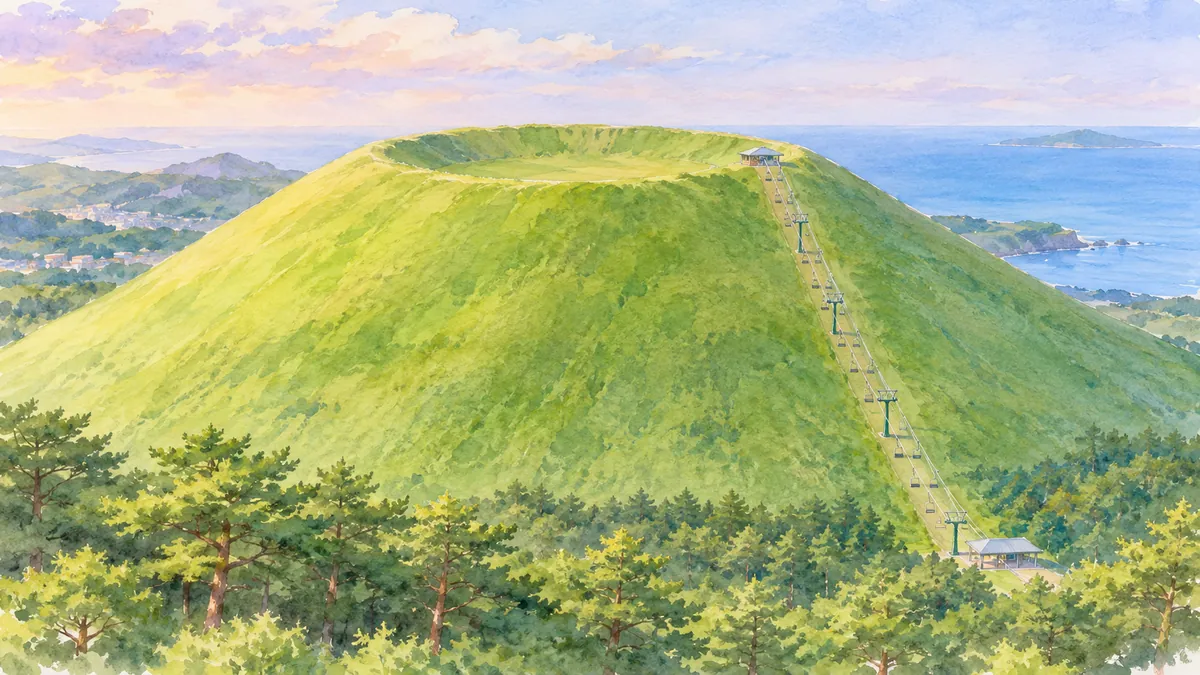
Izu’s day trip is about two volcanic landscapes. Mount Omuro (Omuroyama) is a grassy cone that erupted about 4,000 years ago; you ride a chairlift up (walking up is prohibited) and walk the crater rim, about 1 km. Its lava formed the Jogasaki coast, where the Kadowaki Suspension Bridge hangs 23 m above the sea. Many tours add a short ride on the Izukyu line along the coast and an hour at Izu Shaboten Zoo. The whole peninsula has been a UNESCO Global Geopark since 2018.
Hakone’s classic loop is a chain of transport rides past Owakudani’s steaming volcanic valley, the Open Air Museum and Lake Ashi, with Mount Fuji in view on clear days. The pass makes it easy to follow without planning connections.
Izu also has the stronger winter calendar for a day trip: the capybara bath from November 21, 2026 to April 4, 2027, the Kawazu Cherry Blossom Festival from February 6 to March 7, 2027, and the grass burning on Mount Omuro on the second Sunday of February. See the Kawazu festival guide and the Izu Shaboten Zoo guide.
Crowds, Weather and Mount Fuji Views
Neither place is quiet on weekends and public holidays, and we have no like-for-like crowd figures. Izu drew 40.7 million visitor-visits in FY2025 across the whole region, Shizuoka’s busiest. The east coast roads jam at weekends, and Kawazu fills during the February festival. A weekday helps in both.
For weather, the Izu coast is mild in winter, with January highs of about 11 °C, and December and January are its driest months. Winter also gives the clearest air for Mount Fuji, but no view is guaranteed in either place. If Fuji is the main reason for your trip, Hakone puts it closer to the route; from Mount Omuro it is a clear-day bonus. The Omuro chairlift also stops in strong wind, and from December 7 to 18, 2026 it is closed for maintenance.
Onsen and Families
Both have hot springs. In Izu, Ito, Atami and Shuzenji are onsen towns; Shuzenji has a riverside foot bath, and ryokan day baths there start from about ¥1,000. None of the main Izu day tours includes bath time, so stay a night if a soak matters to you; see where to stay in Izu. Hakone’s hot-spring towns sit along the same loop as its sights, which makes a soak easier to fit into one day.
For families, Izu has the capybaras and the zoo, and the chairlift is an easy way up a volcano. The trade-off is time: on a tour you spend six hours or more in a van. Hakone’s shorter journey suits young children who struggle with long drives. In Izu, a train day with the zoo and Mount Omuro is shorter than most tours.
Tours or Your Own Trip in Each Place
In Izu, a tour saves you from fitting three timetables together: the train, a bus every 30 minutes to two hours, and a chairlift that stops at 16:00 in winter. Our featured tour, the Izu day trip with the train ride and Mount Omuro, combines the chairlift volcano, the zoo, the Izukyu coastal train and the Jogasaki coast with transport from Tokyo. A driver, not a guide, runs it, and reviewers report getting back around 19:00. Tours here are easier, not faster: a weekend van can take longer than the train. Compare every option in the best Izu day trips from Tokyo.
In Hakone, the Freepass makes going on your own simple, and tours add commentary and hotel pickup. If Hakone suits you better, our sister site Hakone Day Trips from Tokyo compares the Hakone tours.
Which to Choose: Izu or Hakone
Choose Izu for a walk around a volcano crater, sea cliffs and a suspension bridge, the coastal train, capybaras in a hot bath from late November to early April, and Kawazu-zakura in February. Accept a long day and check the chairlift status on the morning you go.
Choose Hakone for a shorter commute, a single pass for the whole loop, a lake and ropeways, and a better chance of Mount Fuji along the route. It suits a first trip out of Tokyo and travelers who don’t want a long day; plan it with Hakone Day Trips from Tokyo.
Questions About Izu or Hakone
Is Izu better than Hakone for a day trip from Tokyo?
It depends on what you want to see. Izu is better for a volcano crater rim, lava sea cliffs, the capybara bath and February cherry blossom. Hakone is better for a shorter journey, an all-in-one pass and Mount Fuji along the route.
Can you visit Izu and Hakone in one day?
Not comfortably. They are reached by different lines, and each fills a day on its own. Combine them only with an overnight stay.
Which is cheaper, Izu or Hakone?
On our estimates Hakone is a little lower for transport: about ¥9,500 with the Freepass and Romancecar, against about ¥10,000–12,000 for an Odoriko and bus day to Mount Omuro. Izu day tours start from US$72 per person, with the chairlift and zoo usually paid on the day.
Which is better for Mount Fuji views, Izu or Hakone?
Hakone, if Fuji is your priority, because the classic loop has views along the route. From Mount Omuro Fuji is a clear-day bonus, most likely in December and January. Neither guarantees a view.
Is Izu or Hakone better in February?
Izu has more February events for a day trip: the Kawazu Cherry Blossom Festival (February 6 to March 7, 2027), the capybara bath and the grass burning on Mount Omuro on the second Sunday of February.
Check Dates for the Izu Day Trip with Mount Omuro
Mount Omuro, Izu Shaboten Zoo, the Izukyu coastal train and the Jogasaki coast in one day, with transport from Tokyo. Pick a date in the GetYourGuide calendar to see the price.
Check dates and prices